https://www.teac.net/ for putting together this timeline!

The History of Sending Information
Since recorded history, there has been a need to send messages from one location to another location.
- Runners

The first marathon commemorated the run of the soldier Pheidippides from a battlefield near the town of Marathon, Greece, to Athens in 490 B.C. According to legend, Pheidippides ran the approximately 25 miles to announce the defeat of the Persians to some anxious Athenians. Not quite in mid-season shape, he delivered the message "Niki!" (Victory!) then keeled over and died.
- Smoke and Fire Signals

Great wall of China: Due to its length, the Great Wall of China could not have men along every inch of its ramparts at once watching out for the Mongols, Turks, Tungnu, and Xiongnu. Even with nine Zhen (military districts) covering the 4100 mile length between the First and Last Doors under Heaven, the defenders held true to Sun Tzu’s adage “He who defends everything, defends nothing.” To prioritize their defense, the Chinese created a method to alert garrisons where attacks were in progress. This took the form of a firelight defense system within the watch towers. The Great Wall of China was defended with communication - by watchful eyes, a system of signal fires, lights, and flags, and an army of brave, dedicated, observant men who were quick on their feet.
Misuse of the smoke signal is known to have contributed to the fall of the Western Zhou Dynasty in the 8th century BCE. King You of Zhou had a habit of fooling his warlords with false warning beacons in order to amuse Bao Si, his concubine.
The Crusades 1095 AD: the need for communications between outposts was very important. Bonfires were built on top of castles which were built on top of mountains. Fires signaled other outposts of incoming invaders.

The North American indigenous peoples also communicated via smoke signal. Each tribe had its own signaling system and understanding. A signaler started a fire on an elevation typically using damp grass, which would cause a column of smoke to rise. The grass would be taken off as it dried and another bundle would be placed on the fire. Reputedly the location of the smoke along the incline conveyed a meaning. If it came from halfway up the hill, this would signify all was well, but from the top of the hill it would signify danger.

Smoke signals to indicate the selection of a new Pope
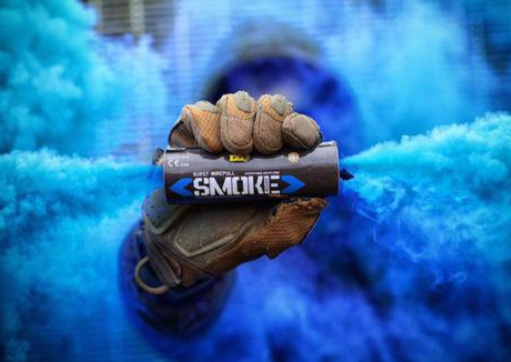
Military colored smoke grenades used to mark positions.
- Horse and rider

In the mid-19th century, California-bound mail had to either be taken overland by a 25-day stagecoach or spend months inside a ship during a long sea voyage. The Pony Express, meanwhile, had an average delivery time of just 10 days..
The Information Age
- Telegraph – the transmission of written words by using Morse Code, one letter at a time over copper wire to send messages.

1851: The Morse system was officially adopted as the standard for continental European telegraphy

Teletype using the Baudot five bit signaling code.
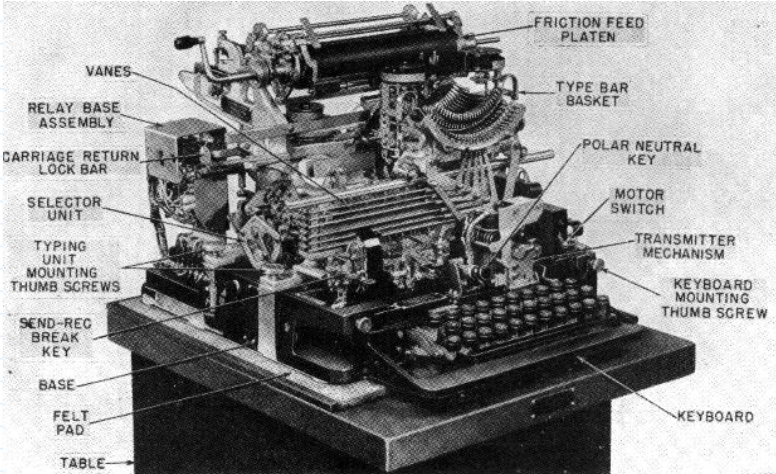
Mores code sent messages one letter at a time with an individual using a telegraph key. The teletype sent one letter at a time, but did so automatically by typing on a key board.
Telegraph Key &World war II Teletype machine

Information Age Hero's
- Nikola Tesla – Pioneer in AC Power Distribution, etc.

- Thomas Edison – Great inventor, light bulb, phonograph, movie camera, etc.

- Benjamin Franklin – Lightning Rod, bifocals, franklin stove, glass harmonica, etc.

- Guglielmo Marconi – Pioneer in long distance radio transmission.

- Alexander Graham Bell – Invented the first practical telephone.

The First Telephone Call. What were the first words ever spoken on the telephone? They were spoken by Alexander Graham Bell, inventor of the telephone, when he made the first call on March 10, 1876, to his assistant, Thomas Watson: "Mr. Watson--come here--I want to see you."
- Samuel F. B. Morse – Inventor of the telegraph.

Voice and data networks until the 1950’s and 1960’s.
- Voice and data networks would stay separate networks until the 1950s and 1960s.
- Modems were invented which used the same basic telephone lines as voice calls, but with different telephone company interface cards.

- The term Modem = Modulation – Demodulation
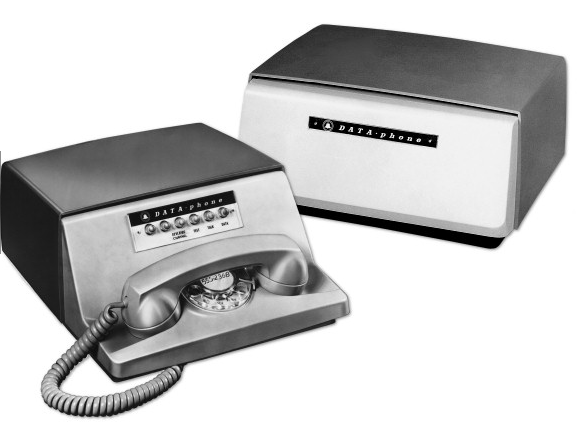

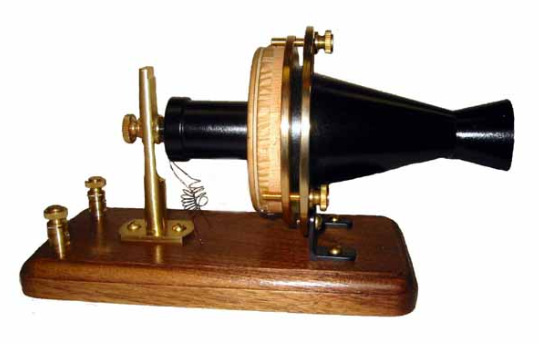
First Telephones


When a patch cord was inserted in a jack, the operator could use one of the keys on the board to cause a ring signal to go the telephone. In the beginning, many of the telephone lines were on party lines. Those are lines with more than one telephone on a line. The operator would ring short and long rings or a combination of these rings for the person who the call was for. It was common for someone else on the line to pick their phone up when they heard it ring and listen to the conversation. And some times put their own “2 cents worth”.


The years since the first modems and telephone lines have brought us to high speed digital lines to our homes and WIFI to our computers.
Data
The advancements in technology that took place from the late 1950s to the present are more than anyone could have ever dreamed would happen. The technology advances took us from big centralized computers to distributed computing and from slow copper wire distribution systems to high speed systems that utilize both wired and RF distribution system. Ethernet started out with large cables and transducers and migrated to very fast Gigabyte wired, and wireless WIFI systems.
Voice
In the world of voice we went from yelling at each other over old crank type telephones to the sophisticated telephones phones of today. We now have voice calls being sent from a smart phones, digitally through central offices to another smart phone. In reality, from your small pocket computer to a another small pocket computer on the distant end, where voice is just an application on your small pocket computer. Did you notice the phrase, “small pocket computer”?
Data
The advancements in technology that took place from the late 1950s to the present are more than anyone could have ever dreamed would happen. The technology advances took us from big centralized computers to distributed computing and from slow copper wire distribution systems to high speed systems that utilize both wired and RF distribution system. Ethernet started out with large cables and transducers and migrated to very fast Gigabyte wired, and wireless WIFI systems.
Voice
In the world of voice we went from yelling at each other over old crank type telephones to the sophisticated telephones phones of today. We now have voice calls being sent from a smart phones, digitally through central offices to another smart phone. In reality, from your small pocket computer to a another small pocket computer on the distant end, where voice is just an application on your small pocket computer. Did you notice the phrase, “small pocket computer”?


